Fairy with Flowers
First Impressions: Whimsy That Lands, Not Floats
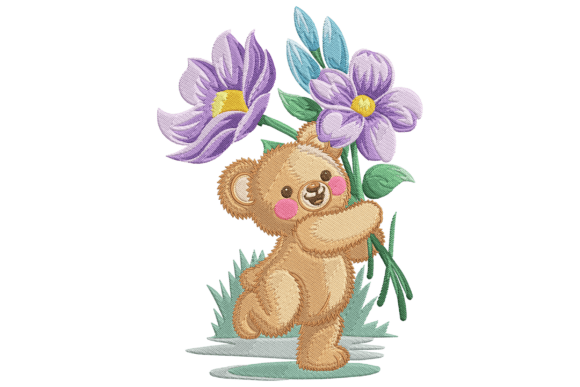
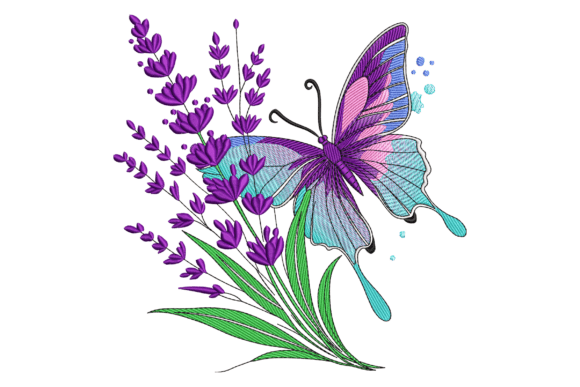
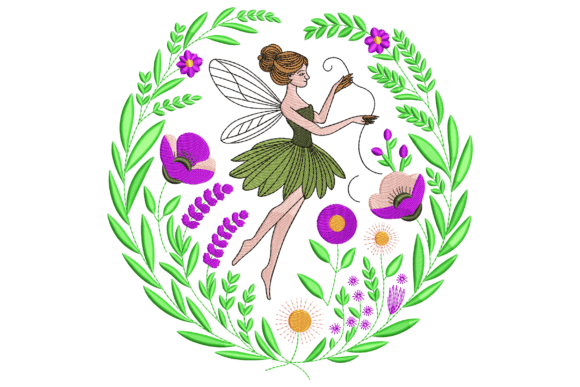
Opening Fairy with Flowers for the first time, I didn’t see “cute”—I saw intentional charm. The composition balances playfulness and elegance: a central fairy figure leans slightly forward, arms cradling a loose bouquet of stylized blooms. There’s no fussy symmetry or over-rendered detail—just confident line work, gentle curves, and breathing room between elements. It reads clearly at 3.5 inches tall, which means it won’t drown on a baby onesie or vanish on a tote bag. As an embroidery designer who’s stitched hundreds of fairy-themed files, I appreciate that this one avoids cliché: no glitter trails, no exaggerated wings, no saccharine expressions. It feels like something you’d actually want to live with—on a linen tea towel, a denim apron, or the back pocket of a child’s overalls.
A Real-World Test: Stitching It onto a Linen-Cotton Kitchen Towel
Last week, I prepped Fairy with Flowers for a small-batch kitchen towel line for a local boutique. Linen-cotton blend, medium weight, slightly nubby texture. I used medium-weight cutaway stabilizer, 40-weight rayon thread, and stitched at standard speed. What stood out wasn’t just how cleanly the satin stitch held the fairy’s wings—it was how the fill stitches in the flowers softened *just enough* against the fabric’s natural slub. No skipped stitches, no puckering, even around the delicate stem curve. The design’s moderate stitch density gave me confidence it would hold up to repeated washing without stiffening or cracking—a real concern with busier fairy motifs. Customers responded instantly: “It’s joyful but not childish,” one said. “Feels handmade, not mass-produced.” That’s the quiet power of Fairy with Flowers: it elevates the ordinary without shouting.
Where It Shines (and Where It Asks for Thought)
Fairy with Flowers works beautifully on:
- Custom apparel: Sweatshirts, relaxed-fit tees, and unstructured jackets—its organic shape softens rigid garment lines.
- Home textiles: Pillow covers, napkins, and tea towels—especially when paired with subtle tonal thread (e.g., sage green on oat linen).
- Baby and nursery items: Onesies, burp cloths, and crib bumper accents—its gentle scale and lack of sharp angles suit infant wear.
- Embroidered patches: Clean edges and balanced negative space mean it presses flat and appliqués smoothly.
- Holiday and gift stitching: Works year-round, but especially resonates for spring birthdays, baby showers, or teacher appreciation—light, uplifting, never dated.
Use extra care on:
- Stretchy fabrics (like jersey or rib knit): Add lightweight tear-away + topping, and reduce stitch speed. The wing outlines rely on clean edge definition—stretch can blur that.
- Dark or heavily textured fabrics: Test thread contrast first. A pale lavender satin stitch may disappear on charcoal terry cloth unless backed with white underlay.
- Caps and curved surfaces: Its horizontal orientation isn’t ideal for front-panel cap embroidery—better suited for back straps or side panels where the shape flows naturally.
- Tiny hoops (under 4”): While scalable, shrinking below 3” risks losing clarity in the flower centers and wing veining. Stick to 3.25–4.5” for best balance.
What It Does for Your Craft Business—Beyond the Stitch
If you’re an Etsy seller or small shop owner, Fairy with Flowers quietly lifts your perceived value. It doesn’t scream “handmade!”—it *feels* handmade, thanks to its thoughtful spacing and organic rhythm. That translates directly to customer trust: buyers sense the design was chosen—not just dropped into a mockup. For personalized gifts, it adds warmth without overwhelming the recipient’s name or date. On a custom embroidered tote bag, it becomes a conversation starter—not a logo, but a signature moment of craft. And for digital product sellers? This is strong design assets material: it pairs well with coordinating floral borders or monogram frames, and its theme fits seamlessly into a broader Fairy Tales collection without visual fatigue.
Designer Notes You’ll Actually Use
Before stitching Fairy with Flowers into your next project, do these five things:
- Test on scrap fabric—same type, same stabilizer, same thread colors. Watch how the fill stitches settle into texture.
- Check thread color contrast in both daylight and artificial light. A soft peach thread might read warm on cream fabric but muddy on beige.
- Review stitch density visually—zoom into the file preview. Look for tight clusters near the fairy’s hairline or flower stems; adjust underlay if needed for stability.
- Confirm hoop size compatibility with your machine and intended item. A 5x7 hoop gives comfortable margin; don’t force it into a 4x4 unless you’ve verified all elements clear the frame.
- Inspect small details in black-and-white mockups. If the fairy’s smile or petal shape disappears when desaturated, it may need subtle reworking for versatility.
Also: verify licensing before selling finished products or bundling Fairy with Flowers as part of a commercial embroidery kit. And always compare how it reads on light versus dark backgrounds—this design gains depth on charcoal, but loses delicacy on black unless you boost underlay.
Final Thought: A Design That Serves the Maker First
Fairy with Flowers isn’t just another machine embroidery design. It’s a practical, expressive tool—one that respects your time, your fabric choices, and your customers’ eyes. It doesn’t ask you to compensate for its flaws. Instead, it invites thoughtful pairing: the right thread, the right stabilizer, the right placement. Whether you’re stitching a single personalized gift or scaling production for a craft fair run, it holds up—not because it’s flashy, but because it’s considered. In a market flooded with overly complex or emotionally vague motifs, Fairy with Flowers stands out by being simply, unmistakably kind to stitch—and kind to wear.