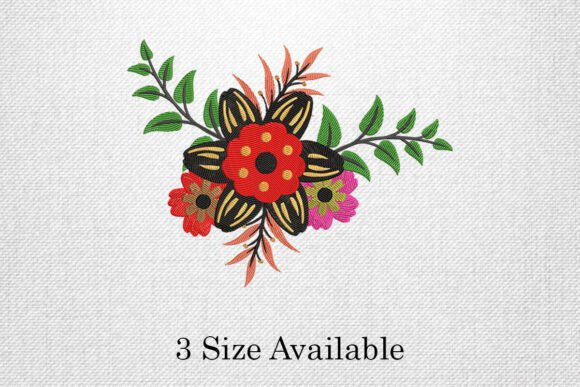
Colorful Floral Bouquet Embroidery Design
First Impression: Bold, Joyful, and Instantly Recognizable
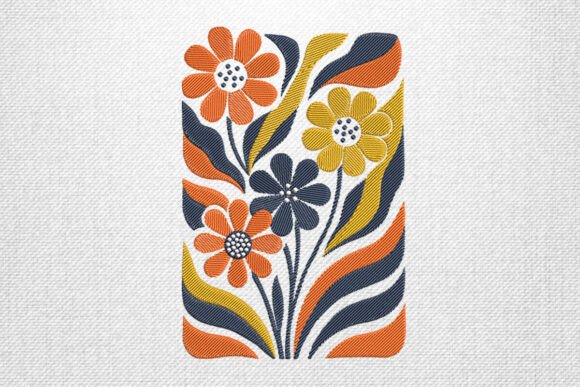
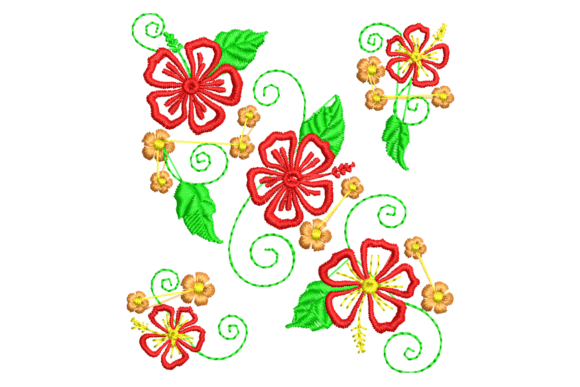
As an embroidery designer who’s curated over 200 craft fair booths in the past decade, my gut reaction to Colorful Floral Bouquet Embroidery Design is immediate: this is a mood-lifter. The title alone—Colorful Floral Bouquet—signals vibrancy and approachability. Combined with the description’s mention of “vivid red, orange, yellow, green, and pink tones” and “intricate floral composition,” it lands as bold yet balanced—not chaotic, not cutesy, not overly rustic or minimalist. It feels modern-farmhouse adjacent but with enough graphic punch to stand out on a crowded handmade market table. Customers scanning your booth won’t scroll past this one. They’ll pause, smile, and reach for the tote bag or tea towel where it’s stitched.
Where This Design Shines in Real Craft Fair Products
In my booth setup—featuring embroidered tote bags, aprons, tea towels, patches, fabric pouches, pillow covers, and small market bags—the Colorful Floral Bouquet Embroidery Design performs strongest when scaled thoughtfully:
- Tote bag design: As a large, centered motif on natural canvas or unbleached cotton, it reads beautifully from six feet away. The color contrast ensures visibility even under tent lighting.
- Apron embroidery: Placed just above the pocket or centered on the bib, it adds cheerful personality without overwhelming function. Ideal for foodie markets or boutique kitchen shops.
- Tea towel embroidery: Works best on lighter-weight linen or cotton towels—where stitch definition stays crisp and colors pop against cream or soft white.
- Embroidered patch: When digitized cleanly, this design translates well to iron-on or sew-on patches. Great for Etsy sellers bundling with denim jackets or backpacks.
- Pillow cover & small pouch: Scaled down to 3–4 inches wide, it retains charm and legibility—making it a strong giftable handmade product for boutiques or holiday markets.
It’s less ideal for curved surfaces like caps unless simplified—those tiny floral details may blur on structured crowns. And while it’s lovely on light fabrics, avoid dark backgrounds unless thread contrast is rigorously tested.
Practical Selling & Production Reality Check
This isn’t just pretty—it’s commercially smart. As a machine embroidery design, its visual clarity at a glance helps customers instantly “get” the product. No decoding required. That matters when someone walks past your booth in 2.3 seconds.
It works equally well as a focal point (e.g., full-bouquet on a tote) or a refined accent (e.g., single stem corner detail on a tea towel). For batch production, its repeatable structure—layered petals, defined stems, consistent spacing—means fewer re-hooping surprises and smoother workflow across dozens of units.
For Etsy sellers and digital sellers: this design photographs exceptionally well. Bright, saturated thread colors render faithfully in natural light, and the floral composition creates organic visual interest in both flat lays and lifestyle mockups. Pair it with a clean printable mockup showing it on multiple product types—your listing will convert faster.
Careful-Use Notes Every Designer Should Know
“Intricate floral composition” means attention is needed—not as a flaw, but as a production checkpoint:
- Avoid dense stitch areas on highly textured towels—stitch density may sink into loops and mute color definition.
- Test on thick fabric (like duck cloth or quilted aprons) with appropriate cutaway stabilizer. Under-stabilizing risks puckering around tight petal clusters.
- On curved cap surfaces or small pouch corners, simplify or scale down before stitching—tiny buds and thin stems can lose clarity below 2.5 inches.
- Dark fabric demands high-contrast thread selection. Don’t assume pink thread reads clearly on navy without testing.
- If offered as a digital embroidery file with optional outlines or fill variations, prioritize those assets—they expand your product range without redesigning.
How It Elevates Your Handmade Product Line
The Colorful Floral Bouquet Embroidery Design doesn’t just decorate—it communicates value. Its vivid palette and intentional composition signal care, craftsmanship, and contemporary taste. Customers perceive higher handmade quality when color is confident and execution is precise.
In booth display terms, it strengthens visual rhythm: group it with neutral-toned products (cream totes, oatmeal pouches) to let the bouquet sing—or pair it with coordinating solids (terracotta, sage, blush) for curated shelf appeal. It also supports brand consistency if you’re building a seasonal collection—think “Spring Bloom Series” anchored by this design.
Most importantly? It sparks engagement. I’ve watched shoppers point, ask, “Is that all one design?” and linger to watch the stitching process on a live demo hoop. That’s booth magic—and it starts with choosing designs like this one.
Embroidery Designer’s Must-Do Checklist
Before cutting your first production fabric, run through these steps:
- Test the embroidery file on scrap fabric matching your final product’s weight and texture.
- Verify thread colors against your chosen base fabric—especially pink and yellow, which shift dramatically on off-whites or ecru.
- Review spacing between elements—tight petal overlaps should clear without merging in stitch-out.
- Confirm hoop size compatibility with your machine and product type (e.g., 5x7" for most tea towels, 4x4" for patches).
- Inspect stitch density in petal centers and layered leaves—adjust underlay or reduce density if needed for stability.
- Use the right stabilizer: medium-weight cutaway for stable fabrics, tear-away for linens, and fusible for lightweight blends.
- Create at least one real mockup—not just digital—and photograph it in daylight and indoor lighting.
- Compare how it looks on three fabric colors (light, medium, dark) to guide customer-facing product photos.
- Confirm commercial licensing status before selling finished products—this is non-negotiable for any commercial embroidery use.
Remember: the Colorful Floral Bouquet Embroidery Design belongs to the Single Flowers Plants category—but its versatility makes it far more than botanical decor. It’s a conversation starter, a booth anchor, and a reliable craft fair product that sells because it feels joyful, intentional, and unmistakably handmade.