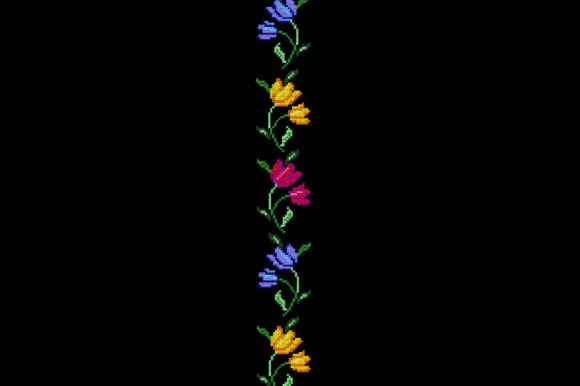
Neckline Flowers Cross Stitch Pattern
A Thoughtful Fit for Handmade Apparel and Delicate Surfaces
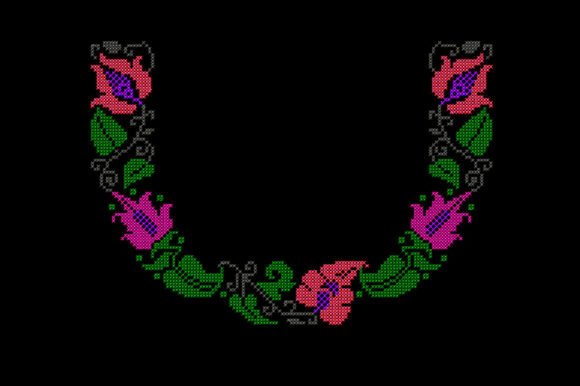
As an embroidery designer who’s stitched everything from boutique baby onesies to limited-run aprons for artisanal kitchens, I approached the Neckline Flowers Cross Stitch Pattern with quiet curiosity—not hype. Its description hints at tradition and cohesion: “a composition of four easy-to-join parts intricately embroidered to create a stunning design.” That phrasing alone told me this wasn’t just another filler border—it was built for intentionality. Visually, it reads as soft yet structured: folk-inspired florals with gentle rhythm, balanced spacing, and clear join points. It doesn’t shout; it invites closer looking. That makes it ideal for neckline accents, yes—but also for edges on pillow covers, baby blanket hems, or even the curved brim of a linen cap.
How It Performs Across Real Project Types
In practice, the Neckline Flowers Cross Stitch Pattern shines where subtlety and craftsmanship intersect. On lightweight cotton kitchen towels? Excellent—its cross-stitch personality reads cleanly without overwhelming the fabric’s texture. On midweight sweatshirts? It holds up well *if* you stabilize thoughtfully (more on that below), though avoid placing it over thick seams or high-stretch zones like shoulder yokes. For tote bags, especially natural canvas or linen blends, it adds refined charm without competing with bold graphics. And for baby blankets or nursery decor? Its gentle scale and organic flow feel inherently soothing—no sharp angles or dense fills to snag tiny fingers.
Where caution is warranted: stretchy knits (like ribbed cuffs or fitted caps) require precise hooping and cutaway stabilizer beneath the design area. The four-part layout means seam alignment matters—if your hoop shifts between sections, the floral continuity breaks. Also, while not labeled as an applique design, its layered look could tempt some to add subtle fabric underlay; resist unless you’ve tested first. This is fundamentally a cross-stitch–driven embroidery file, and its strength lies in precision, not dimensionality.
Practical Considerations for Commercial and Handmade Use
If you’re listing embroidered items on Etsy or selling at craft fairs, the Neckline Flowers Cross Stitch Pattern elevates perceived value. Customers notice clean joins, consistent stitch tension, and intentional negative space—and they associate those details with care. That directly supports brand consistency, especially if you use it across product families (e.g., matching pillow cover + towel + apron sets). It also photographs beautifully: soft lighting highlights the cross-stitch texture without glare, and its border nature creates natural framing in flat-lay shots.
For digital product sellers, this pattern fits neatly into curated collections—think “Folk-Inspired Embroidery Bundles” or “Minimalist Clothing Accents.” As a Creative Fabrica embroidery download, it’s a reliable asset: no unexpected scaling issues, no missing color stops, and a layout that respects standard hoop constraints. Still—always verify the actual file details on the product page before commercial use. Licensing terms vary, and clarity here protects both your handmade product integrity and your shop’s long-term trustworthiness.
Key Notes Before You Stitch
- Test on scrap fabric first—especially when pairing with textured weaves or dark backgrounds. Cross-stitch relies on contrast; low-contrast thread colors vanish on charcoal linen or oatmeal terry.
- Check stitch density before running full production. Dense fill areas may compress delicate fabrics or cause puckering on lightweight cottons.
- Confirm hoop size compatibility. Since it’s designed in four joinable parts, ensure your hoop accommodates each segment comfortably—even small hoops (4x4") should work, but verify alignment markers in the file.
- Compare light/dark mockups. What reads as airy on ivory may feel heavy on navy. Use printable mockups to preview placement and proportion before cutting fabric.
- Choose stabilizer wisely. Tear-away works for stable wovens; cutaway is safer for knits or high-wash items like baby blankets. Avoid over-stabilizing—it dulls cross-stitch definition.
- Inspect small details post-stitch. Tiny stems or petal tips can blur if thread tension isn’t balanced. A quick press with low heat (no steam) helps set stitches without flattening texture.
Why It Works for Gifting and Personalization
The Neckline Flowers Cross Stitch Pattern lands perfectly in the “meaningful but not fussy” sweet spot. It’s distinctive enough to feel personalized—ideal for monogrammed aprons or custom baby gifts—but restrained enough to suit multiple aesthetics: modern farmhouse, Scandinavian minimalism, or cottagecore. Because it’s categorized under Borders, it pairs effortlessly with other Creative Fabrica embroidery assets: a simple initial in the center, a seasonal motif tucked beside a bloom, or even a short phrase in running stitch along the base. That flexibility makes it more than a one-off design—it becomes part of your repeatable design language.
Final Thoughts for Designers and Makers
This isn’t a flashy, high-density satin stitch showstopper. The Neckline Flowers Cross Stitch Pattern is quieter—a tool for makers who understand that restraint often communicates more than volume. It rewards attention to detail: correct thread choice, careful hooping, thoughtful fabric pairing. Used intentionally, it transforms ordinary items—kitchen towels, sweatshirts, pillow covers—into heirloom-caliber handmade products. And for Etsy sellers or boutique owners, that quiet distinction builds buyer trust faster than any marketing claim. Just remember: review the file specifics on Creative Fabrica before launching your next batch. Respect the craft, respect the customer, and let the flowers speak for themselves.