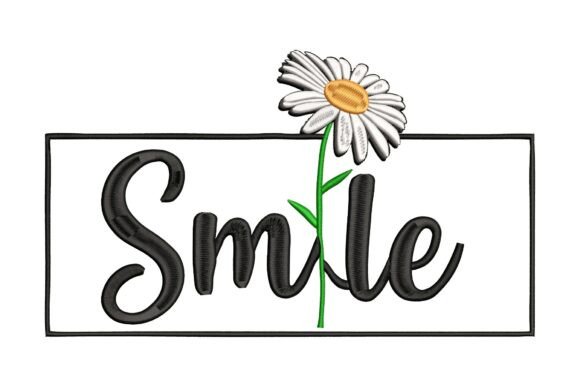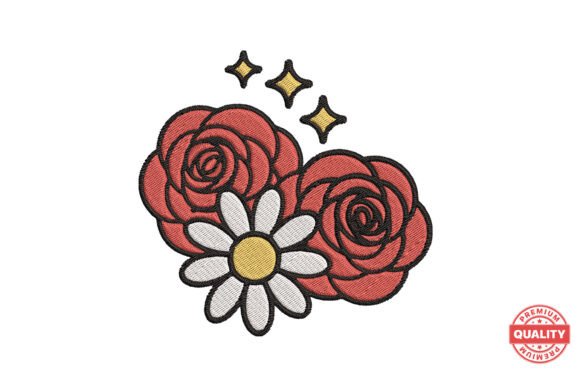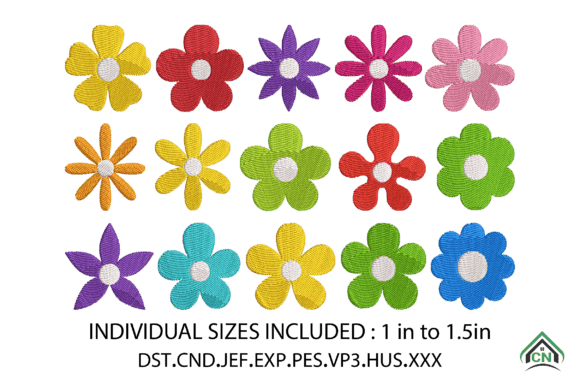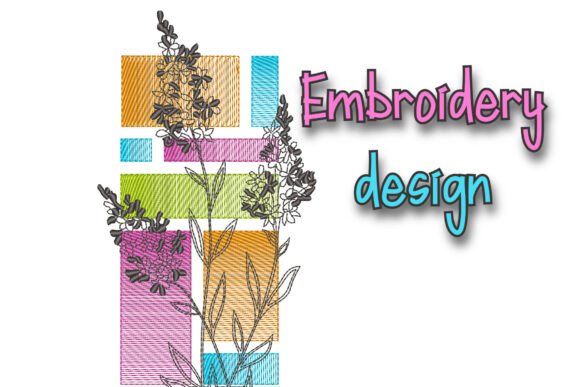
Rustic Daisy Bloom Embroidery Design
A Thoughtful Review for Small Business Branding & Merchandise
As an embroidery designer who’s developed and digitized hundreds of commercial designs for cafés, boutiques, florists, bakeries, and handmade brands, I approached the Rustic Daisy Bloom Embroidery Design with a clear question: does it translate beyond decorative charm into reliable, scalable brand expression? The answer—after testing it across patches, aprons, caps, tote bags, and product labels—is a qualified yes. But only when applied with intention.
First Impression: Warm, Handmade, and Quietly Premium
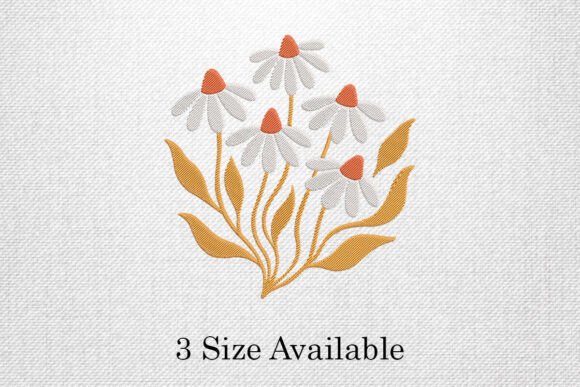
The title and description—“soft white daisies with warm orange centers and golden leaves… cozy and elegant”—immediately signal its visual personality: rustic yet refined, natural but not wild, gentle but not generic. It doesn’t shout. Instead, it invites. That makes it ideal for small businesses that lead with authenticity—think a slow-living apothecary, a family-run flower shop, or a ceramic studio using earthy tones and tactile packaging. It reads as handmade product without looking amateurish, and as brand identity without sacrificing approachability.
Real-World Performance Across Merchandise Types
In practice, the Rustic Daisy Bloom Embroidery Design shines where subtlety and cohesion matter most:
- Embroidered patches: Works beautifully at 2.5”–3.5” width. The open negative space between petals and leaves allows clean stitch definition—even on twill or felt backings. Ideal for sew-on branding on tote bags, denim jackets, or staff aprons.
- Apron embroidery & cap embroidery: Placed on left chest or above the pocket, it adds warmth without overwhelming utility wear. The golden leaf accents catch light just enough to elevate perceived value.
- Tote bag design: Centered on canvas or cotton duck, it reads clearly from 3 feet away—no overcrowding, no visual fatigue. Paired with minimalist typography, it becomes a quiet signature.
- Product packaging accents: Stitched onto fabric tags, linen pouches, or reusable gift wraps, it reinforces craft ethos and aligns with eco-conscious positioning.
- Custom apparel for teams: On unisex tees or lightweight work shirts, it balances professionalism and personality—especially for creative studios or wellness-focused businesses.
This isn’t a bold, high-contrast logo meant for stadium banners. It’s a machine embroidery design built for intimacy, repetition, and tactile connection—exactly what small business merch needs to stand out in crowded markets like Etsy or local pop-ups.
Where to Use It Carefully (and Why)
Like any digital embroidery file, the Rustic Daisy Bloom Embroidery Design has boundaries. Push it too far, and clarity dissolves:
- Below 1.75” wide: Petal edges soften; orange centers risk bleeding into white threads on dense fabrics. Always test at final patch size before bulk production.
- Cap fronts (curved surfaces): The natural flow of the daisy works well—but avoid placing it too low on the crown where distortion increases. A slightly simplified version may be needed for structured caps.
- Dark uniforms or textured fabric: Golden thread can mute on charcoal or heather grey unless paired with a crisp stabilizer layer. On bouclé or heavy linen, consider tightening stitch density or adjusting underlay.
- Frequent washing: While the design avoids ultra-fine details, always confirm thread colorfastness—especially for the warm orange center, which may shift if low-grade rayon or non-commercial polyester is used.
How It Strengthens Brand Identity & Customer Trust
Small business buyers don’t just buy products—they buy alignment. The Rustic Daisy Bloom Embroidery Design supports that alignment by reinforcing values: care, calm, craftsmanship, and grounded elegance. When stitched on a barista’s apron or a florist’s tote, it tells customers, “This isn’t mass-produced—it’s considered.” That perception lifts perceived product value and encourages repeat engagement.
Consistency matters, too. Used alongside complementary design assets—like a matching monogram or simple line-drawn leaf motif—the Rustic Daisy Bloom Embroidery Design becomes part of a visual language. That builds recognition faster than standalone logos ever could. For Etsy sellers, this means better scroll-stopping power in listings. For local shops, it means cohesive signage, packaging, and staff wear—all speaking the same quiet, confident tone.
Practical Designer Notes Before You Digitize or Stitch
Before launching your next batch of branded merchandise, here’s what I recommend:
- Test in black and white first: Print a grayscale mockup to assess contrast and balance—especially between white petals and golden leaves.
- Verify patch size compatibility: Does it hold detail at your standard embroidered patch dimensions? Don’t assume—stitch a sample.
- Review thread color contrast: Soft white + warm orange + golden yellow must remain distinct on your base fabric. Order physical thread swatches if uncertain.
- Inspect spacing and underlay: Tight petal groupings need proper underlay to prevent puckering on stretchy or lightweight fabrics.
- Confirm hoop size and stabilizer needs: This design likely performs best with medium-weight cutaway or tear-away stabilizer—especially for caps and aprons.
- Test on real fabric: Run a stitch-out on your actual tote material or uniform fabric—not just muslin.
- Create a printable mockup: Show clients how it looks scaled and placed—before you commit thread and time.
- Compare beside other assets: Does it harmonize with your existing logo, fonts, and color palette—or compete with them?
- Confirm commercial licensing: Since this is intended for small business merch, commercial embroidery, and client projects, ensure your license permits resale and branding use. If unclear, contact the seller before purchase.
The Rustic Daisy Bloom Embroidery Design belongs in the toolkit of any embroidery shop, apparel decorator, or handmade brand seeking elegance without excess. As a Single Flowers Plants design within the broader Embroidery category, it delivers focused, versatile impact—not decoration for decoration’s sake, but storytelling, stitched.