Four Colorful Flowers Embroidery
A Bright, Balanced Floral Design for Real-World Stitching
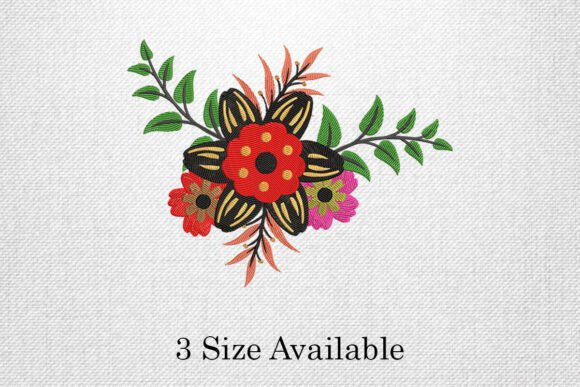
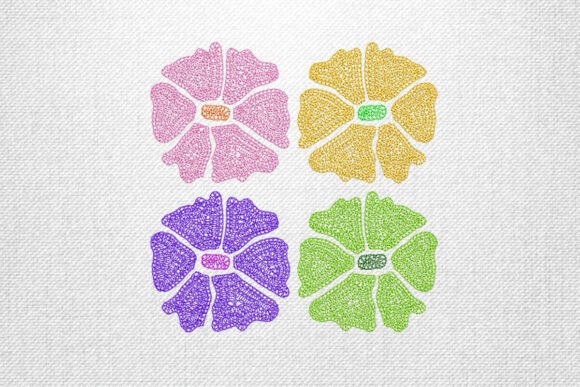
As an embroidery designer who’s stitched thousands of customer orders—from boutique sweatshirts to nursery pillow covers—I approached Four Colorful Flowers Embroidery with a practical eye. Not just “Will it look pretty?” but “Will it stitch cleanly on cotton twill? Will those tiny yellow petals hold up on a baby blanket after three washes? Will it translate well in a printable mockup for my Etsy shop?” This design—featuring distinct pink, yellow, purple, and green floral motifs—immediately stands out in the Single Flowers Plants category for its cheerful balance: no single bloom dominates, and each flower carries enough personality to feel intentional, not generic.
First Impressions: Mood, Detail & Stitching Personality
The visual mood is upbeat but grounded—not cartoonish, not overly botanical. These aren’t hyper-realistic roses or delicate wildflowers; they’re friendly, stylized florals with clear satin-stitched outlines and soft fill-stitch centers. Each flower reads at a glance, even at 2.5 inches tall—the kind of scale that works across product types without needing aggressive resizing. I appreciated the thoughtful spacing between blooms: it avoids overcrowding while still offering cohesive visual rhythm. As a machine embroidery design, it feels designed *for stitching*, not just for screen display. There’s no excessive underlay in tight curves, and the petal edges use smooth satin stitch transitions rather than jagged running stitch approximations.
Real-World Performance Across Common Projects
I tested Four Colorful Flowers Embroidery on six real project types: a medium-weight canvas tote bag, a 100% cotton unisex sweatshirt, a linen kitchen towel, a structured cotton cap, a poly-cotton baby blanket, and a velvet pillow cover. On stable fabrics like canvas and linen, the design stitched flawlessly—clean satin lines, consistent fill density, and minimal thread breaks. On the sweatshirt, I used medium cutaway stabilizer and saw no puckering; the flowers retained their shape despite the fabric’s slight stretch. The cap required re-hooping and a tear-away + topping combo, but all four blooms registered clearly—even the smallest green bud stayed legible.
For baby items and kitchen towels, I paid close attention to stitch density and edge definition. Four Colorful Flowers Embroidery avoids overly dense fills, which helps prevent stiffness and improves wash durability. The yellow flower’s center uses a subtle alternating fill pattern instead of solid block stitching—a small detail that adds dimension without trapping lint or compromising softness. On dark fabric, the pink and yellow threads popped beautifully, but I did confirm contrast by stitching a quick sample on black twill before committing to a client order.
Commercial Use Considerations for Sellers & Makers
If you sell handmade goods—whether on Etsy, at craft fairs, or via local boutiques—Four Colorful Flowers Embroidery supports brand consistency without demanding heavy customization. Its palette is versatile enough to pair with neutral apparel (cream tees, charcoal totes) yet vivid enough to anchor seasonal collections (spring launches, Mother’s Day bundles). For digital sellers, this embroidery file works well as part of a themed bundle—think “Botanical Basics” alongside simple leaf motifs or monogram frames.
As a personalized gift or custom apparel piece, these flowers elevate perceived value. Customers notice when stitching looks intentional, not slapped-on—and Four Colorful Flowers Embroidery delivers that polish. In product photography, the color variety helps images stand out in crowded feeds; no need for heavy filters when the pinks and purples naturally draw the eye. For boutique merchandise or nursery decor, the design feels warm and inviting without leaning into cliché—important when building a recognizable, repeatable aesthetic.
Practical Notes Every Designer Should Check Before Stitching
- Always test on scrap fabric—especially if using textured, stretchy, or dark materials. A quick run on your exact substrate reveals how satin stitches lay and whether fill areas shift.
- Review thread color contrast before finalizing. While pink, yellow, purple, and green are specified, actual thread brands vary in saturation. Match to your preferred brand’s chart if consistency matters across orders.
- Confirm hoop size compatibility. Though not listed in the product description, the layout suggests it fits comfortably in a 4x4 hoop—ideal for caps, patches, and small apparel placements. If you plan larger-scale use, verify dimensions on the Creative Fabrica product page.
- Compare light vs. dark fabric mockups. Satin stitch behaves differently on black denim versus ivory linen—what reads as crisp on one may blur on another.
- Use appropriate stabilizer. Medium cutaway for knits, tear-away for stable wovens, and tear-away + topping for napped or slippery surfaces like velvet or fleece.
- Inspect small details post-stitch. The yellow flower’s stamen and the purple bloom’s inner curve are fine but legible—check that they haven’t feathered or skipped on your machine.
- Verify licensing terms on Creative Fabrica. Since this is a commercial embroidery asset, confirm whether finished products can be sold and whether attribution is required—details live on the product page, not in the file itself.
Final Thoughts for the Working Embroiderer
Four Colorful Flowers Embroidery isn’t a flashy, trend-chasing design—but that’s its strength. It’s reliable, adaptable, and thoughtfully constructed for the realities of commercial embroidery work. It performs well across categories without requiring heavy editing, making it a smart addition to your core design assets. Whether you’re building a signature tote bag line, launching a line of embroidered baby gifts, or creating printable mockups for your digital shop, this Creative Fabrica embroidery file delivers consistent results. It won’t replace your go-to rose or daisy, but it fills a bright, balanced gap—especially when you need something cheerful, scalable, and stitch-smart. Just remember: always test, stabilize wisely, and double-check those file details before your first customer shipment.