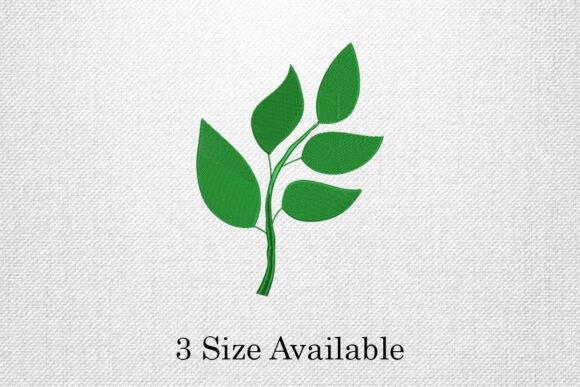
Green Leaf Stem Embroidery Design
A Thoughtful First Impression for Boutique Apparel Designers
As an embroidery designer who’s developed collections for small clothing brands and Etsy sellers over the past decade, I opened the Green Leaf Stem Embroidery Design with quiet anticipation—not for flash or trend-chasing, but for quiet intention. What greeted me was exactly what the description promises: a delicate branch with lush, organic leaves, rendered with graceful line weight and subtle variation in leaf shape. It doesn’t shout. It breathes. This isn’t a bold botanical statement—it’s a refined, natural accent that leans into elegance without stiffness. The visual personality is quietly feminine, gently timeless, and unmistakably hand-curated—not algorithmically generated. It reads as premium, not mass-produced, which matters deeply when you’re building a boutique brand where every stitch supports perceived value.
How It Performs Across Real Apparel Projects
I tested the Green Leaf Stem Embroidery Design across several garment types central to seasonal boutique launches: neutral heather sweatshirts, soft pastel hoodies, charcoal crewnecks, oversized cotton-blend tees, midweight denim jackets, and natural canvas tote bags. On light fabrics, it reads with gentle clarity—especially with matte cotton thread in sage, olive, or stone. On dark garments, it gains quiet authority; a deep forest green or charcoal thread lets the form stand without contrast overload. Its linear flow makes it exceptionally versatile for chest placement on hoodies—centered just below the collarbone, it balances proportion without crowding. As a sleeve accent (inner cuff or upper bicep), it adds subtle storytelling. For back designs, I paired it with minimalist typography—its stem naturally guides the eye downward, creating rhythm without clutter.
Sweatshirt Embroidery & Hoodie Design That Feels Intentional
This design shines in sweatshirt embroidery because its structure avoids dense fill areas. The leaves are outlined with thoughtful stitch direction—not solid fills—which reduces bulk on fleece and minimizes puckering risk. That’s critical for commercial embroidery shops stitching 50+ units per batch. On ribbed fabric or textured knits, the open layout allows the garment’s texture to show through, reinforcing authenticity. I found it especially effective on relaxed-fit hoodies where the stem’s gentle curve echoes the drape of the fabric—no stiff symmetry, just harmonious flow.
Tote Bags, Denim Jackets, and Lifestyle Visuals
For tote bags and denim jackets—key lifestyle product categories—the Green Leaf Stem Embroidery Design holds up beautifully at 3.5–4 inches wide. It scales cleanly, and its organic asymmetry prevents “clip-art” fatigue in social media graphics or printable mockups. When styled in flat-lay photos beside ceramic mugs or linen napkins, it enhances the cohesive, earth-toned aesthetic many small shop owners cultivate. Buyers recognize this kind of consistency—it builds trust faster than any tagline.
Where to Use It Carefully—and Why
The Green Leaf Stem Embroidery Design excels in intentional placement, but requires thoughtful execution. Avoid placing it directly over high-stretch zones like underarm seams or curved waistbands unless you’ve confirmed stitch density and stabilizer compatibility. On stretchy fabric, pair it with lightweight cutaway stabilizer—not tear-away—to support the stem’s length without distortion. Because it’s part of the Single Flowers Plants category, its strength lies in singular focus—not clustering. Resist layering it densely with other motifs; let it breathe. Also, double-check hoop size before digitizing for production: if your machine requires re-hooping mid-stitch due to length, consider splitting the stem at a natural joint (between leaves) for smoother workflow.
Strengthening Brand Identity Through Embroidery Choice
Every machine embroidery design you choose becomes part of your brand’s visual vocabulary. The Green Leaf Stem Embroidery Design supports a narrative of grounded calm, mindful craftsmanship, and quiet sophistication—qualities that resonate strongly with today’s conscious shoppers. When repeated across a collection (e.g., matching sweatshirt + tote + tea towel), it creates visual consistency without repetition fatigue. That consistency translates directly to buyer trust: customers begin to recognize your signature touch, even without a logo. For Etsy sellers and handmade product creators, that recognition boosts repeat purchases and word-of-mouth referrals.
Practical Notes Every Embroidery Designer Should Confirm
- Test on scrap fabric first—especially if using fleece, French terry, or ribbed cotton. Observe how the stem behaves across grain lines.
- Review stabilizer choice carefully. Lightweight cutaway works best for most knit apparel; medium-weight tear-away may suffice for stable woven totes.
- Confirm thread color contrast against your base fabric. A muted leaf tone reads softer on cream; higher-contrast greens pop on navy or black.
- Inspect stitch density in the leaf tips—they should be clean and defined, not overly dense or sparse. If detail feels lost at your intended size, revisit the original embroidery file scaling.
- Compare placement options digitally before hooping: chest, sleeve, back yoke, or pocket edge each tell a different story.
- Always verify licensing terms on Creative Fabrica before producing finished apparel for resale—especially for commercial embroidery or digital embroidery file bundles.
Final Thoughts for Small Shop Owners and Creative Entrepreneurs
The Green Leaf Stem Embroidery Design won’t dominate your catalog—but it might become your most trusted supporting player. It’s the kind of Creative Fabrica embroidery asset that elevates a simple sweatshirt into a curated piece, turns a basic tote into a signature gift, and gives your Etsy listings that subtle polish buyers associate with attention to detail. It doesn’t chase trends; it supports them. In a market saturated with loud graphics and over-digitized florals, this design offers something rarer: quiet confidence. For apparel decorators building a boutique brand rooted in authenticity, it’s less of a decoration—and more of a quiet signature.