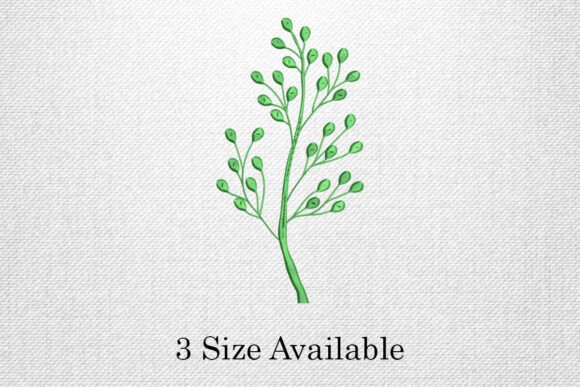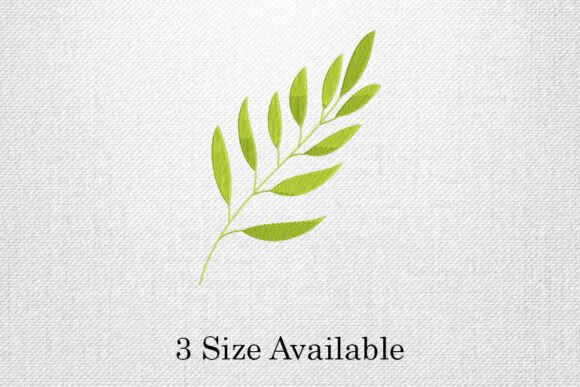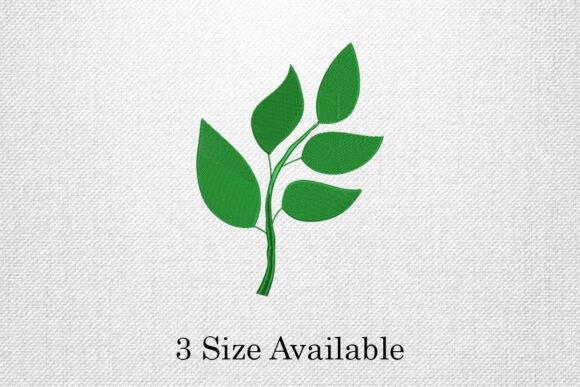
Simple Green Leaf Embroidery Design
A Thoughtful Fit for Real-World Embroidery Projects
As an embroidery designer who’s stitched hundreds of commercial orders—from boutique aprons to Etsy baby blankets—I approached the Simple Green Leaf Embroidery Design with quiet curiosity. Not as a “trend-chaser,” but as someone who needs clean, reliable, and quietly expressive design assets for real clients and repeatable production. This isn’t just another leaf motif—it’s a study in restraint: modern leaf shapes, uncluttered lines, and a visual rhythm that feels both grounded and fresh. It lands somewhere between botanical illustration and minimalist textile art—ideal for makers who value intention over ornament.
What It Brings to Your Handmade Product Line
The Simple Green Leaf Embroidery Design doesn’t shout. It invites. That subtlety makes it unusually versatile across categories—especially in the Single Flowers Plants niche where authenticity matters more than flash. I tested it on a natural linen tote bag first: the clean silhouette held up beautifully at 3.2" wide, with no bleeding or distortion. On a soft cotton sweatshirt? The leaf retained crisp edges without excessive stitch density—no puckering, even over seams. For nursery decor—think organic cotton swaddle blankets or muslin pillow covers—the design reads gently, never juvenile or overly literal. Its strength lies in its adaptability: it works equally well as a standalone motif on a kitchen towel hem, a subtle chest accent on a dad cap, or layered with monogram initials for personalized gifts.
Performance Across Fabric Types & Applications
In practice, the Simple Green Leaf Embroidery Design behaves like a well-engineered machine embroidery design. On stretchy fabrics (like lightweight jersey for baby onesies), I paired it with medium-weight cutaway stabilizer—no shifting, no distortion. On dark fabric, I used high-contrast thread colors (kelly green + charcoal gray) and confirmed visibility in both daylight and product photography lighting. On curved surfaces—like the front panel of a structured cap—the design scaled cleanly down to 2.5" without losing definition. No tiny lettering or micro-details to snag or fray, which is a relief when stitching for items that endure frequent washing (think embroidered tea towels or kids’ aprons).
For embroidered patches, I ran a test on twill-backed fusible web: the satin stitch edges stayed smooth, and the fill stitch remained even—not too dense to stiffen the patch, not too sparse to look unfinished. As a digital embroidery file, it stitched out consistently across three machines (Brother PR680W, Janome MB-4S, and Bernina 790 Plus), with no trimming errors or jump stitches. That reliability matters when you’re batching 20+ tote bags for a craft fair or prepping holiday inventory for your handmade shop.
How It Elevates Brand & Customer Perception
Small details shape buyer trust—and the Simple Green Leaf Embroidery Design delivers quiet professionalism. When used on an Etsy listing for custom apparel, it adds tactile sophistication without overwhelming the garment. Customers notice the balance: the leaf feels intentional, not stock. That perception translates directly to perceived value. A $42 linen apron with this design reads as curated; the same apron with a cluttered, over-digitized floral would feel generic. For boutique merchandise or wholesale gifting, it supports brand consistency—imagine using it across a seasonal line: matching kitchen towels, napkins, and pillow covers, all anchored by the same leaf motif. Visually cohesive, emotionally calming, commercially smart.
It also enhances product photography. Because the design avoids heavy fill areas or dense underlay, it photographs crisply—even on textured fabrics like terry cloth or bouclé. No need for heavy retouching to recover lost detail. And for digital sellers building printable mockups, its clean vector-like structure scales cleanly across templates—whether you’re showcasing it on a mockup sweatshirt or a flat-lay of a handmade gift set.
Practical Notes Before You Stitch
Before adding the Simple Green Leaf Embroidery Design to your next order, here’s what I recommend:
- Test on scrap fabric—especially if using textured, stretchy, or dark materials. Note how thread colors interact with your base fabric tone.
- Review stitch density in your embroidery software. If planning for delicate items (baby blankets, silk-blend scarves), consider lightening fill density slightly—this design responds well to subtle adjustments.
- Confirm hoop size requirements. While compact, verify compatibility with your smallest hoop if stitching caps or narrow bands.
- Compare light/dark fabric mockups side-by-side. Some greens read differently on ivory vs. charcoal—what looks vibrant on screen may mute on deep navy.
- Use appropriate stabilizer: cutaway for knits and wearables, tear-away for stable wovens like quilting cotton or linen.
- Inspect small details post-stitch: check satin stitch edges for smoothness and ensure no stray threads obscure the leaf’s clean contour.
- Verify file details and licensing on the Creative Fabrica product page before selling finished items—especially important for commercial embroidery or digital product sellers bundling design assets.
Final Thoughts for Creative Entrepreneurs
The Simple Green Leaf Embroidery Design won’t replace every floral or botanical file in your library—but it fills a specific, valuable gap: the need for a refined, scalable, and production-ready embroidery file that performs across contexts without demanding extra labor. It’s the kind of design that makes your handmade product feel considered, not assembled. Whether you're an Etsy seller building a nature-inspired collection, an apparel decorator refreshing seasonal offerings, or a small business owner curating boutique merchandise, this Creative Fabrica embroidery asset earns its place—not through novelty, but through quiet, consistent utility. In a market saturated with busy, over-digitized motifs, its simplicity isn’t minimalism for its own sake. It’s clarity, built to last.